跳转到内容
The App Fair Project

update

11 posts with the tag “update”

App Fair Retrospective, 2025

As 2025 draws to a close, it’s a good moment to pause and reflect on a year that proved to be both challenging and energizing for the App Fair Project. Building on the momentum of last year’s retrospective, 2025 saw the project deepen its advocacy work, expand its public presence, and respond to some of the most consequential shifts in the app ecosystem in over a decade.

At FOSDEM 2025 in February I presented “Free App Stores and the Digital Markets Act.” The talk focused on how the DMA reshapes the legal and technical landscape for app distribution in Europe, and what those changes mean for free software, alternative app stores, and user autonomy. You can watch the presentation and read the transcript at FOSDEM 2025: Free App Stores and the Digital Markets Act.

Earlier I had the pleasure of being interviewed for the FSFE’s Software Freedom Podcast by Bonnie Mehring1, where we discussed the App Fair Project, the role of regulation in restoring balance to app ecosystems, and why distribution freedom matters for both developers and users. Listen to the complete Software Freedom Podcast interview.

This year I joined the board of the F-Droid project. The App Fair Project takes much of its inspiration from F-Droid, and we regard it as a sister project with much wisdom and experience to share from its 15 years of providing free and open-source software to the Android community.

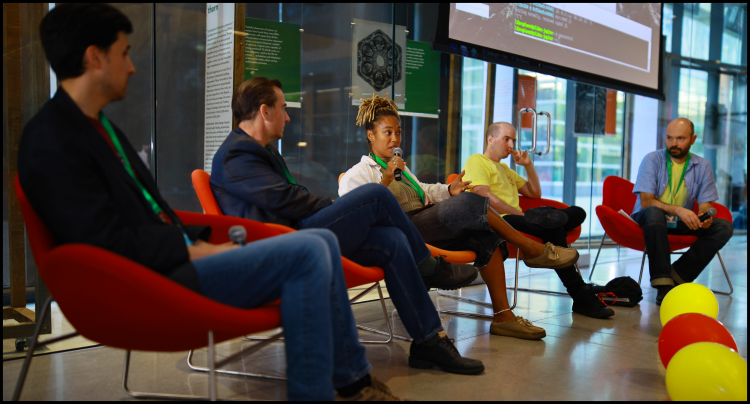
In October, I joined a panel at the Free Software Foundation’s 40-year anniversary celebration2, alongside representatives from the FSF, the Electronic Frontier Foundation, and Sugar Labs. It was inspiring to reflect on four decades of free software advocacy, and to situate today’s struggles over app stores and gatekeepers within that longer history. A write-up of the panel is available at FSF40-panel.

In November, I attended the Digital Markets Act enforcement symposium3, organized by the free-expression organization ARTICLE 19. I participated as a technical expert, helping to assess the issues and proposals raised by presenters at a time when regulators, advocates, and technologists are grappling with how DMA enforcement should work in practice.4 These conversations underscored that while the DMA is already having real effects, sustained technical and policy engagement is essential to ensure its goals are realized.

One of the defining moments of 2025 came in August, when Google shocked the Android world by unilaterally announcing5 that all developers would be required to register with Google in order to continue distributing their apps on Android Certified devices, even outside of Google Play.

This move fundamentally alters long-standing assumptions about sideloading and independent distribution on Android, and it prompted a series of posts in opposition, published through the F-Droid Blog. In September we posted “Free App Stores and Google’s Developer Registration Decree” and in October we published “What We Talk About When We Talk About Sideloading”, which resulted in an extraordinary amount of press coverage6 and increased awareness of the issue. I was interviewed by a variety or tech publications as well as the popular Techlore channel7.

In parallel, we launched keepandroidopen.org as a focused resource to document the implications of this policy shift, coordinate advocacy, and provide calls to action to resist the lockdown of Android.

As we turn toward 2026, there is no shortage of work ahead. I’ll be attending FOSDEM 2026 alongside members of the F-Droid team and board, and presenting on the main track: “Fear and Loathing in the App Stores: when FLOSS principles collide with the Gatekeeper interests.”8

The project will continue ongoing advocacy in support of strong DMA enforcement and continued opposition to Google’s Android Developer Registration Decree and similar efforts that undermine independent app distribution. We will also continue to forcefully oppose Apple’s “notarization” requirement for its third-party app marketplaces in the EU and Japan (as well as Brazil in the near future).

A founding principle of the App Fair Project is that you have the right to install whatever software you want on your computer, regardless of whether it is on your desk or in your pocket. Apple’s “notarization” and Google’s “developer registration” are two sides of the same coin: a ploy by the mobile duopoly to strengthen their gatekeeping and control what you are allowed to do with the devices that you own.

We’re also preparing the full opening of the App Fair submission process and launch of the appfair.net index, cataloging apps distributed through the App Fair Project and making them easier for users to discover. The technical pieces are mostly in place and we’ve been publishing a handful of sample apps throughout the year in an effort to make the pipeline stable and robust.

2025 reaffirmed that the fight for fair, open, and user-respecting app ecosystems is far from over, but it also showed that sustained advocacy, technical clarity, and community collaboration can make a real difference. I’m deeply grateful to everyone who supported the App Fair Project this year.

Here’s to carrying that momentum forward into 2026!

  1. Software Freedom Podcast #30: The App Fair Project with Marc Prud’hommeaux: https://fsfe.org/news/podcast/2025/episode-30.en.html

  2. Free Software Foundation 40th Anniversary Celebration: https://www.fsf.org/events/fsf40-celebration

  3. ARTICLE 19 DMA Report (PDF): https://www.article19.org/wp-content/uploads/2025/11/DMA-DIGITAL-FINAL-2025.pdf

  4. Tech Policy Press: “What Europe’s Digital Markets Act Has Delivered So Far and What Comes Next”: https://www.techpolicy.press/what-europes-digital-markets-act-has-delivered-so-far-and-what-comes-next/

  5. Android Developers Blog: “A new layer of security for certified Android devices,” 25 August 2025: https://android-developers.googleblog.com/2025/08/elevating-android-security.html

  6. Press reactions: https://keepandroidopen.org/#press-reactions

  7. The Fight for Android’s Open Ecosystem: https://www.youtube.com/watch?v=ZnYSwX45ODA

  8. FOSDEM 2026 Schedule: https://fosdem.org/2026/schedule/event/TYZH97-fear-loathing-app-stores/

What We Talk About When We Talk About Sideloading

This is a cross-posting of an article I wrote for the F-Droid blog at: https://f-droid.org/en/2025/10/28/sideloading.html. As well as managing the App Fair Project, I also serve on the F-Droid board of directors.

We recently published a blog post with our reaction to the new Google Developer Program and how it impacts your freedom to use the devices that you own in the ways that you want. The post garnered quite a lot of feedback and interest from the community and press, as well as various civil society groups and regulatory agencies.

In this post, I hope to clarify and expand on some of the points and rebut some of the counter-messaging that we have witnessed.

Google’s message that “Sideloading is Not Going Away” is clear, concise, and false

Section titled “Google’s message that “Sideloading is Not Going Away” is clear, concise, and false”

Shortly after our post was published, Google aired an episode of their Android Developers Roundtable series, where they state unequivocally that “sideloading isn’t going anywhere”. They follow-up with a blog post:

Does this mean sideloading is going away on Android? Absolutely not. Sideloading is fundamental to Android and it is not going away.

This statement is untrue. The developer verification decree effectively ends the ability for individuals to choose what software they run on the devices they own.

It bears reminding that “sideload” is a made-up term. Putting software on your computer is simply called “installing”, regardless of whether that computer is in your pocket or on your desk. This could perhaps be further precised as “direct installing”, in case you need to make a distinction between obtaining software the old-fashioned way versus going through a rent-seeking intermediary marketplace like the Google Play Store or the Apple App Store.

Regardless, the term “sideload” was coined to insinuate that there is something dark and sinister about the process, as if the user were making an end-run around safeguards that are designed to keep you protected and secure. But if we reluctantly accept that “sideloading” is a term that has wriggled its way into common parlance, then we should at least use a consistent definition for it. Wikipedia’s summary definition is:

the transfer of apps from web sources that are not vendor-approved

By this definition, Google’s statement that “sideloading is not going away” is simply false. The vendor — Google, in the case of Android certified devices — will, in point of fact, be approving the source. The supplicant app developer must register with Google, pay a fee, provide government identification, agree to non-negotiable (and ever-changing) terms and conditions, enumerate all their current and future application identifiers, upload evidence of their private signing key, and then hope and wait for Google’s approval.

You, the consumer, purchased your Android device believing in Google’s promise that it was an open computing platform and that you could run whatever software you choose on it. Instead, starting next year, they will be non-consensually pushing an update to your operating system that irrevocably blocks this right and leaves you at the mercy of their judgement over what software you are permitted to trust.

You, the creator, can no longer develop an app and share it directly with your friends, family, and community without first seeking Google’s approval. The promise of Android — and a marketing advantage it has used to distinguish itself against the iPhone — has always been that it is “open”. But Google clearly feels that they have enough of a lock on the Android ecosystem, along with sufficient regulatory capture, that they can now jettison this principle with prejudice and impunity.

You, the state, are ceding the rights of your citizens and your own digital sovereignty to a company with a track record of complying with the extrajudicial demands of authoritarian regimes to remove perfectly legal apps that they happen to dislike. The software that is critical to the running of your businesses and governments will be at the mercy of the opaque whims of a distant and unaccountable corporation. Monocultures are perilous not just in agriculture, but in software distribution as well.

As a reminder, this applies not just to devices that exclusively use the Google Play Store: this is for every Android Certified device everywhere in the world, which encompasses over 95% of all Android devices outside of China. Regardless of whether the device owner prefers to use a competing app store like the Samsung Galaxy Store or the Epic Games Store, or a free and open-source app repository like F-Droid, they will be captive to the overarching policies unilaterally dictated by a competing corporate entity.

In promoting their developer registration program, Google purports:

Our recent analysis found over 50 times more malware from internet-sideloaded sources than on apps available through Google Play.

We haven’t seen this recent analysis — or any other supporting evidence — but the “50 times” multiple does certainly sound like great cause for distress (even if it is a surprisingly round number). But given the recent news of “224 malicious apps removed from the Google Play Store after ad fraud campaign discovered”, we are left to wonder whether their energies might better be spent assessing and improving their own safeguards rather than casting vague disparagements against the software development communities that thrive outside their walled garden.

In addition, other recent news of over 19 million downloads of malware from the Play Store leads us to question whether the sole judgement of a single corporate entity can be trusted to identify and assess malware, especially when that judgement is clouded by commercial incentives that may not align with the well-being of their users.

Google has been facing public outcry against their heavy-handed policies for a long time, but this trend has accelerated recently. Last year they crippled ad-blockers in Chrome and Chromium-based browsers by forcing through their unpopular “manifest v3” requirement for plugins, and earlier this year they closed off the development of the Android Open Source Project (AOSP), which is how they were able to clandestinely implement the verification infrastructure that enforces their developer registration decree.

Developer verification is an existential threat to free software distribution platforms like F-Droid as well as emergent commercial competitors to the Play Store. We are witnessing a groundswell of opposition to this attempt from both our user and developer communities, as well as the tech press and civil society groups, but public policymakers still need to be educated about the threat.

To learn more about what you can do as a consumer, visit keepandroidopen.org for information on how to contact your representative agencies and advocate for keeping the Android ecosystem open for consumers and competition.

If you are an app developer, we recommend against signing yourself up for Google’s developer registration program at this time. We unequivocally reject their attempt to force this program upon the world.

Over half of all humankind uses an Android smartphone. Google does not own your phone. You own your phone. You have the right to decide who to trust, and where you can get your software from.

Panel opening statement for the FSF40 Celebration

I was honored to be invited as a panelist at the FSF 40-year celebration event in Boston this weekend. Along with Paige Collings, senior speech and privacy activist from the EFF, Devin Ulibarri, the executive director of Sugar Labs, and Greg Farough, the FSF’s campaigns manager, we spent an hour discussing issues around software freedom and privacy, and answered a variety of interesting questions from the audience.

FSF40 panel

Once they post video and transcription, I will reproduce it here, but until then I’ll convey my notes in response to the opening question:

How has the freedom of users of mobile phones changed since the beginning of the F-Droid, in 2010?

In 2010, there were about 25 million active Android devices around the world. In 2025, it has grown to over 3 billion. Given that Android is built on free software — insofar as it runs atop the GPL-licensed Linux kernel — this can be viewed as a phenomenal expansion of free software adoption. The fact that nearly half of humanity is walking around today with a free-software-powered smartphone in their pocket is a testament to the power of the ideas that started right here, 40 years ago, with the Free Software Foundation.

Also since 2010, the F-Droid Project has grown from a small personal hobby project with a handful of apps, into a repository of thousands of free and open-source applications. F-Droid and the App Fair are the app stores you can trust, because all the apps are reviewed to keep out closed and proprietary software dependencies and flag any marginal “anti-features”, so the user is always in control of the software they are running on their device. It is truly the free software Garden of Eden.

And with free software applications running on top of a free kernel, what’s not to love about the current state of the world? We live in a magical time, right?

So also since 2010, the mobile phone ecosystem has contracted from a slew of competing systems — Blackberry, Symbian, Palm OS, Firefox OS, Ubuntu Touch, etc. — down to just two: Android and iPhone, with Android currently holding around 70% global market share. And with the entrenchment of this global smartphone duopoly has arisen increasingly extractive behavior from the corporations that control their ecosystems.

This year, 2025, has been especially dark. In March, the “Android Open Source Project” closed off its development from the public, switching to delayed and periodic snapshot source releases. This has been very difficult for projects like GrapheneOS which are based on AOSP.

And last month, the other shoe dropped: Google announced that starting next year, they would be blocking all app installations on Android certified devices from any developer who has not registered with the Google Developer Program, which requires the scanning of government identity documents, the payment of a fee, and the agreement to Google’s non-negotiable and ever-changing terms and conditions. Developers of Android apps around the world — regardless of whether they distribute through F-Droid, some other commercial app store, or simply by uploading an apk to their web site — will be cut off from their users forever unless they comply. If this goes into effect, it is an extinction event for F-Droid.

And so to answer the original question, “how has the freedom of users of mobile phones changed since in 2010”, I’ll summarize by saying: it went up, and then it went down. And that’s where we are today.

FSF40 panelists

Free App Stores and Google's Developer Registration Decree

This is a cross-posting of an article I wrote for the F-Droid blog at: https://f-droid.org/en/2025/09/29/google-developer-registration-decree.html. As well as managing the App Fair Project, I also serve on the F-Droid board of directors.

For the past 15 years, F-Droid has provided a safe and secure haven for Android users around the world to find and install free and open source apps. When contrasted with the commercial app stores — of which the Google Play store is the most prominent — the differences are stark: they are hotbeds of spyware and scams, blatantly promoting apps that prey on their users through attempts to monetize their attention and mine their intimate information through any means necessary, including trickery and dark patterns.

F-Droid is different. It distributes apps that have been validated to work for the user’s interests, rather than for the interests of the app’s distributors. The way F-Droid works is simple: when a developer creates an app and hosts the source code publicly somewhere, the F-Droid team reviews it, inspecting it to ensure that it is completely open source and contains no undocumented anti-features such as advertisements or trackers. Once it passes inspection, the F-Droid build service compiles and packages the app to make it ready for distribution. The package is then signed either with F-Droid’s cryptographic key, or, if the build is reproducible, enables distribution using the original developer’s private key. In this way, users can trust that any app distributed through F-Droid is the one that was built from the specified source code and has not been tampered with.

Do you want a weather app that doesn’t transmit your every movement to a shadowy data broker? Or a scheduling assistant that doesn’t siphon your intimate details into an advertisement network? F-Droid has your back. Just as sunlight is the best disinfectant against corruption, open source is the best defense against software acting against the interests of the user.

Google’s move to break free app distribution

Section titled “Google’s move to break free app distribution”

The future of this elegant and proven system was put in jeopardy last month, when Google unilaterally decreed that Android developers everywhere in the world are going to be required to register centrally with Google. In addition to demanding payment of a registration fee and agreement to their (non-negotiable and ever-changing) terms and conditions, Google will also require the uploading of personally identifying documents, including government ID, by the authors of the software, as well as enumerating all the unique “application identifiers” for every app that is to be distributed by the registered developer.

The F-Droid project cannot require that developers register their apps through Google, but at the same time, we cannot “take over” the application identifiers for the open-source apps we distribute, as that would effectively seize exclusive distribution rights to those applications.

If it were to be put into effect, the developer registration decree will end the F-Droid project and other free/open-source app distribution sources as we know them today, and the world will be deprived of the safety and security of the catalog of thousands of apps that can be trusted and verified by any and all. F-Droid’s myriad users will be left adrift, with no means to install — or even update their existing installed — applications. (How many F-Droid users are there, exactly? We don’t know, because we don’t track users or have any registration: “No user accounts, by design”)

While directly installing — or “sideloading” — software can be construed as carrying some inherent risk, it is false to claim that centralized app stores are the only safe option for software distribution. Google Play itself has repeatedly hosted malware, proving that corporate gatekeeping doesn’t guarantee user protection. By contrast, F-Droid offers a trustworthy and transparent alternative approach to security: every app is free and open source, the code can be audited by anyone, the build process and logs are public, and reproducible builds ensure that what is published matches the source code exactly. This transparency and accountability provides a stronger basis for trust than closed platforms, while still giving users freedom to choose. Restricting direct app installation not only undermines that choice, it also erodes the diversity and resilience of the open-source ecosystem by consolidating control in the hands of a few corporate players.

Furthermore, Google’s framing that they need to mandate developer registration in order to defend against malware is disingenuous because they already have a remediation mechanism for malware they identify on a device: the Play Protect service that is enabled on all Android Certified devices already scans and disables apps that have been identified as malware, regardless of their provenience. Any perceived risks associated with direct app installation can be mitigated through user education, open-source transparency, and existing security measures without imposing exclusionary registration requirements.

We do not believe that developer registration is motivated by security. We believe it is about consolidating power and tightening control over a formerly open ecosystem.

If you own a computer, you should have the right to run whatever programs you want on it. This is just as true with the apps on your Android/iPhone mobile device as it is with the applications on your Linux/Mac/Windows desktop or server. Forcing software creators into a centralized registration scheme in order to publish and distribute their works is as egregious as forcing writers and artists to register with a central authority in order to be able to distribute their creative works. It is an offense to the core principles of free speech and thought that are central to the workings of democratic societies around the world.

By tying application identifiers to personal ID checks and fees, Google is building a choke point that restricts competition and limits user freedom. It must find a solution which preserves user rights, freedom of choice, and a healthy, competitive ecosystem.

Regulatory and competition authorities should look carefully at Google’s proposed activities, and ensure that policies designed to improve security are not abused to consolidate monopoly control. We urge regulators to safeguard the ability of alternative app stores and open-source projects to operate freely, and to protect developers who cannot or will not comply with exclusionary registration schemes and demands for personal information.

If you are a developer or user who values digital freedom, you can help. Write to your Member of Parliament, Congressperson or other representative, sign petitions in defense of sideloading and software freedom, and contact the European Commission’s Digital Markets Act (DMA) team to express why preserving open distribution matters. By making your voice heard, you help defend not only F-Droid, but the principle that software should remain a commons, accessible and free from unnecessary corporate gatekeeping.

The GPL and Commercial App Stores: Time for a Reconsideration

The App Fair Project requires that all apps that it distributes be licensed under the GNU General Public License. When the project builds and distributes these apps through to the commercial app store channels (e.g., the Apple App Store and the Google Play Store), the GPL is the one and only license that dictates the distribution terms. While many developers have historically chosen the GPL on moral grounds, the App Fair’s choice of this license is more pragmatic: a strong copyleft license is the practical way to protect the community efforts that go into building these applications and defend them against bad actors.

A major problem with free or open-source software on commercial app stores is that once they achieve any level of notoriety, they immediately become a target for grifters who take the source code, bundle in some extra profit-seeking software (typically ad-banners or spyware “analytics” packages), and then re-publish the same app with a deceptively similar name and some slick marketing. When the app’s source code has been published under one of the non-copyleft permissive licenses (Apache, BSD, MIT, etc.), there is basically nothing the developer can do to prevent it: you gave your code away, no strings attached, and they took it and monetized it. Fair play, as far as the free-riding imposters are concerned. For these reasons, the permissive licenses are often referred to as “pushover licenses”.

Copyleft licenses like the GPL serve as an effective defense against these grifts. The GPL permits anyone to create derivative works from the published source code, but only if those derivative works themselves also publish their source code. And that includes all the source code, which would include all the data-gathering and advertisement-serving SDKs that infest so many of the ostensibly “free” apps that dominate the charts of the commercial app stores. Publishing and distributing an app without also publishing the source code, while certainly possible, is a violation of the terms of the GPL, and thus the original developer has a very straightforward recourse: report the violation to Apple or Google or whoever runs the store, and they will be obligated to remove the offending application promptly.

One might therefore assume that copyleft licenses would be the dominant form of license for free/open-source apps on the commercial app stores. However, in iOS app developer circles, there is a persistent misconception that GPL apps are not permitted at all on the Apple App Store. On the face of it, this is clearly nonsense: many of the most-downloaded apps on the App Store are published under the GPL: Signal, Element, Wordpress, SimpleNote, IceCubes, iSH, Bitwarden, Mastodon, Telegram, and Proton Mail, just to name a few. I myself have published numerous GPL apps to the App Store, with nary a peep from Apple about the license during their app review process.

Apple has never said that GPL-licensed apps are disallowed on their app store. The truth is, Apple couldn’t care less about how you license your software. The origin of the anti-GPL App Store policy canard started as a result of a one-sided kerfuffle from 2010, where the Free Software Foundation heard that there was a rogue GNU Go app floating around the App Store. As the copyright and trademark holders, the FSF complained to Apple about the app violating their rights1, and as a result, Apple removed the app from their App Store. Such actions are a daily occurrence: when a piece of software is identified as violating the laws of a jurisdiction, the distributor of the software is obligated to remove it. Unfortunately, the FSF decided to interpret this in a follow-up blog post as evidence that Apple “has it in” for free software:

Apple has removed GNU Go from the App Store, continuing their longstanding habit of preventing users from doing anything that Apple doesn’t want them to do.2

Fast-forward 15 years to the present day, and the chilling effect of this statement has metastasized – with much strategic amplification by opponents of software freedom – into an overwhelming sentiment among iOS app developers that the GPL is an outright prohibited license for their App Store. No amount of evidence – such as the aforementioned list of GPL apps like Signal, etc. – seems enough to dissuade iOS developers from shunning the GPL in favor of non-copyleft pushover licenses that leave them at risk of having their work taken and re-distributed as adware-infested junk with impunity. Or, more likely, they simply choose to keep their source code closed rather than share it with the world and risk being taken advantage of.

Much has changed since 2010. In 20153, Apple loosened their grip and started permitting anyone to compile and run software on their own iPhone, without needing an Apple Developer account. And the Digital Markets Act in the European Union, which came into effect in 2023, compelled Apple to open up their App Store monopoly to competition, enabling for the first time alternative app marketplaces to begin distributing software under their own terms4. These two factors alone are sufficient to comply with the GPL’s requirements and the four essential freedoms5 that it protects.

It is true that the Apple App Store has many problematic policies: usage restrictions, mandatory DRM, and the ability for a single central company to remotely disable and remove software without the user’s consent. But the Google Play Store also has nearly identical policies, and yet the GPL is a relatively popular license to use among Android app developers. One of the main drivers for the difference in this perception is the FSF’s historic antipathy towards Apple and general tolerance towards Google, despite these corporations being two halves of the mobile device duopoly and enacting nearly identical policies for the terms of software distribution on their commercial app marketplaces. But regardless – and even without the aforementioned concessions on the part of Apple – the GPLv3 has a clause that renders any concerns about the policies of these app stores moot. Section 7 states:

If the Program as you received it, or any part of it, contains a notice stating that it is governed by this License along with a term that is a further restriction, you may remove that term.6

In other words, the commercial app stores can slap whatever GPL-violating terms and conditions they want onto the software that they distribute. And the end user can duly ignore all of them, and continue to exercise their rights to study, modify, and redistribute the software however they want.

When the FSF first took their position on the GPL and the Apple App Store in 2010, smartphones were still something of a novelty. Since that time, their presence has expanded astronomically: there are over 5 billion active smartphones in 2025, and nearly 90% of adults worldwide possess one and use it daily. Like it or not, smartphones are the central computer in the everyday life for the vast majority of humanity. If free software is denied to users of these devices, then free software is doomed to extinction, and humankind will be forever subject to the injustices of proprietary and opaque software. It is time the Free Software Foundation took another look at their position on how free software – specifically, apps licensed under the GPL – can have a place in this modern world.

  1. GPL Enforcement in Apple’s App Store https://www.fsf.org/news/2010-05-app-store-compliance

  2. More about the App Store GPL Enforcement https://www.fsf.org/blogs/licensing/more-about-the-app-store-gpl-enforcement

  3. Xcode 7 allows anyone to download, build and ‘sideload’ iOS apps for free https://9to5mac.com/2015/06/10/xcode-7-allows-anyone-to-download-build-and-sideload-ios-apps-for-free/

  4. Digital Markets Act https://en.wikipedia.org/wiki/Digital_Markets_Act

  5. The four essential freedoms https://www.gnu.org/philosophy/free-sw.en.html#four-freedoms

  6. GNU General Public License Section 7: Additional Terms https://www.gnu.org/licenses/gpl-3.0.en.html#section7

Software Freedom Podcast Interview

I was recently interviewed about the App Fair Project for the FSFE’s Software Freedom Podcast. I had a great discussion with Bonnie Mehring about many aspects of the App Fair’s philosophy and mechanics.

SFP#030: App Fair Project with Marc Prud'hommeaux

<div class="timestamp">Bonnie</div>
<div class="transcript-line">Before we start with the podcast, we would like to say thank you to all of you who support the FSFE's work with money. Working for software freedom and producing podcasts costs money. Please consider supporting us with a donation under fsfe.org/donate and in the show notes.</div>
<br>
<div class="timestamp">Marc</div>
<div class="transcript-line">I'd really like to say thank you to the F-Droid project because this project is essentially trying to bring F-Droid to a universal marketplace.</div>
<br>
<div class="timestamp">Bonnie</div>
<div class="transcript-line">Welcome to the Software Freedom Podcast. This podcast is brought to you by the Free Software Foundation Europe. We are a charity that works on empowering users to control technology. I'm Bonnie Maring and today I'm here with the developer and maintainer of the App Fair Project, Marc Prud'hommeaux.</div>
<br>
<div class="timestamp">Marc</div>
<div class="transcript-line">Hello, Bonnie. Thanks for having me.</div>
<br>
<div class="timestamp">Bonnie</div>
<div class="transcript-line">Thank you, Marc, for making the time. We are actually here at FOSDEM and it was quite a journey to find this place where we are now recording. But back to the App Fair Project. So the App Fair is a free and open source app marketplace for iOS that we will now talk about a bit more and it is also related to the Digital Markets Act. And I'm really curious to hear the story, how the relationship is there. And yeah, I'm really happy that you made the time to talk to me about it. Thank you very much.</div>
<br>
<div class="timestamp">Marc</div>
<div class="transcript-line">Well, thank you.</div>
<br>
<div class="timestamp">Bonnie</div>
<div class="transcript-line">So, Marc, you are a very technical person as you are also the maintainer and the developer of the App Fair Project. Has it been useful for you to work with the policy and the legal department of the FSFE in the past? Because this is how we got to know each other through our legal department at the FSFE.</div>
<br>
<div class="timestamp">Marc</div>
<div class="transcript-line">Yeah, definitely. As you say, I don't have a legal or policy background. I'm a software developer. I've been writing software for over 25 years. I've been developing apps for mobile devices, for the iPhone and for Android since around 2008. And that's been primarily my central role for as long as I've been working professionally. And it was really only through happenstance that I came into advising on policy roles, somewhat recently as a result of some of this work around the Digital Markets Act.</div>
<br>
<div class="timestamp">Bonnie</div>
<div class="transcript-line">All right. How did you... Before we start with the Digital Markets Act, how did you came up with the idea of the App Fair Project?</div>
<br>
<div class="timestamp">Marc</div>
<div class="transcript-line">Well, it's pretty simple. I've been building and shipping apps for a very long time. I've done dozens and dozens of applications. All that time, I've been frustrated by observing that actually programming, developing the app is not that large a percentage of the work and labor that goes into it. So much of it goes into the distribution of the application, sort of the mechanics of getting it from the developer's hands into the end user's hands. And so for a very long time, I've been thinking over ideas around devops and about how you can facilitate creators to get their works into the hands of end users. And one of the projects that really has inspired me over the years has been the F-Droid project for Android. A lot of my ideas around the App Fair are really inspired by the great work that they've been doing all this time. And for those who might not know, F-Droid is essentially a free app store for Android devices. You create free and open source software, and then you essentially submit the source code to the F-Droid project. They make sure that it is following the guidelines. And then essentially they build your software and they distribute it through their application. It's pretty simple in theory. And I've always thought, why not have something like that for the iPhone? And so that was really the gestation of the idea around the App Fair.</div>
<br>
<div class="timestamp">Bonnie</div>
<div class="transcript-line">So can you briefly explain for our listeners what the App Fair Project is and what it does? So as I already mentioned, it's a marketplace for apps and it's on iOS. Is it on iOS only, or is it also available on Android?</div>
<br>
<div class="timestamp">Marc</div>
<div class="transcript-line">No. So this is where it's recently, somewhat recently expanded. The idea has turned into not just a software marketplace for iPhone devices, but for all devices. And essentially in the world right now, every device is either Android or iPhone. You know, there are some there are some devices that are perhaps experimental, but almost a hundred percent of consumer mobile applications run on either iPhone or Android. So the goal of the App Fair has really become to be able to create applications and distribute it to everyone, a hundred percent of humanity. So that means not only just all devices, but also all languages and all abilities with an emphasis on accessibility technologies. And so the structure of the App Fair project, it's a nonprofit organization. It's based in the United States and in France. In the United States, it's a 501(c)(3) nonprofit charity. And the idea is that the App Fair Project is, consists of maintainers and administrators as part of the volunteers and the staff, as well as translators. And they're the ones that essentially liaise between the creating organizations of the applications and the distribution channels, the mechanism by which the applications get into the hands of the end users. So we don't necessarily create the apps ourselves. The creators of the applications will be individuals, perhaps open source developers, hobbyist students, also organizations. So it can be governmental or nonprofit organizations, or it could be corporations. There's no rule against profit-seeking corporations from building these applications, as long as they follow the guidelines that the apps themselves are free and open source, and that they adhere to a variety of guidelines. For example, there can't be any tracking technologies. There can't be any analytics or surveillance. It has to be 100% open source. So you need to be able to audit and review everything that goes into these applications. And then there will be additional things that you might be able to do, but need to be called out. For example, if you're using a non-free backend service that might not be prohibited, but it also needs to be clearly explained to the users before they install the application.</div>
<br>
<div class="timestamp">Bonnie</div>
<div class="transcript-line">Oh my god, I now have a feeling that it's like a really, really huge project, because you have mentioned already so many aspects, the language, the accessibility, and now also, I mean, we all know developing free software can be quite challenging, because a lot of libraries have a lot of different licenses, and you need to make sure that those licenses work together. So I now have the feeling that there's a lot of work behind the project itself, and making sure that the apps in this project actually follow all of those guidelines. How do you manage?</div>
<br>
<div class="timestamp">Marc</div>
<div class="transcript-line">Yeah, well, actually, the technology of building applications has advanced a lot in recent years. It's never been easier to get an application sort of stood up and be able to be installed on a mobile device and use it. A lot of the technologies that rely on like Swift UI on iOS and Jetpack Compose on Android make it much easier to create applications that are localizable into multiple languages and have great support for the system accessibility features. So the technology for creators has really advanced to a great stage where people are able to, in a much shorter amount of time than before, come up with an excellent premier-feeling professional applications. And then in the actual application building stage, the mechanism that takes the application and builds it, those technologies have also advanced quite a bit, so that it's a lot easier to perform scans on the source code for things like licenses and for bad code that you want to make sure doesn't slip through for malware and viruses. And a lot of that, a lot of that ground has been trod by projects like the F-Droid project for building applications for Android and also the Debian free software project and Homebrew for macOS. So a lot of these things will be standing on the shoulders of these giants that have come before us and reusing a lot of the technologies that they've already used. Now that's the technology portion of it. The human portion of it, to be able to review these things, that does require a fair amount of labor because there are aspects to the software that require individual judgment in order to validate whether or not something is going to be an acceptable piece of software to distribute. And that's really where the staff and the volunteers for the App Fair project will come into play and be able to provide that human component for reviewing these things. The technology that we create will facilitate that as much as possible, but there's no, there's no substitute for for humans being able to look over these things.</div>
<br>
<div class="timestamp">Bonnie</div>
<div class="transcript-line">So you rely on staff and on volunteers. How can somebody of our listeners, for example, volunteer with you?</div>
<br>
<div class="timestamp">Marc</div>
<div class="transcript-line">So we're starting to ramp up volunteers. We only have a couple people really right now as the number of applications that go into the project expand. We anticipate that from the pool of creators, we'll also be soliciting volunteers to help come into the project that might be able to use their expertise to review, probably not their own apps, but other apps as part of the project. And so we expect it to be very much a community that is formed up of the creators themselves, as well as independent people who might be end users of the applications. They can help form the pool of the translators to be able to bring applications into the languages that they actually want to use their applications in. Because the translation is a critical component to sort of the principles of universality of these applications so that you can have your application that is created by someone who say only speaks German, have that in the hands of someone who thinks their Cambodian grandmother would find it very useful.</div>
<br>
<div class="timestamp">Bonnie</div>
<div class="transcript-line">Is there a central address that people can take a look at?</div>
<br>
<div class="timestamp">Marc</div>
<div class="transcript-line">Yep. https://appfair.org is our main site for the organization. And then the technology is hosted right now, mostly on GitHub. So https://github.com/appfair is the root for the technology.</div>
<br>
<div class="timestamp">Bonnie</div>
<div class="transcript-line">This is a short break for our own cause. Thank you for listening to the Software Freedom Podcast. Working for software freedom and producing podcasts costs money. Please consider supporting us with a donation on the fsfe.org/donate and in the show notes. Thank you so much for the introduction to the project. I would now like to ask you, how did Apple react?</div>
<br>
<div class="timestamp">Marc</div>
<div class="transcript-line">Yeah, so basically I mentioned the F-Droid project for Android earlier as being an inspiration. And it's sort of the idea is why not have something like this for Apple products? And the short answer is that there's no mechanism for having third party app stores on Apple devices. You know, Android has always had the ability to install third party app marketplaces F-Droid. And then various vendors, Samsung and T-Mobile, they have their own app stores. And then in China, those are the only app stores available are the ones by Tencent and Baidu, because Google Play services is not available there. So Android very deeply has baked in the capacity to have the ability to install third party app stores, which are basically just apps that install and manage other apps is essentially all that that is from the end user device. Apple has historically never had anything like that until the Digital Markets Act was proposed. And one of the requirements of that act is that they open up their systems enough to be able to have what they term alternative app marketplaces.</div>
<br>
<div class="timestamp">Bonnie</div>
<div class="transcript-line">Now we are at the Digital Markets Act. This was also what I was aiming for a bit. Can you briefly explain this to our listeners? Because it is a European law. You are a US citizen. So how does this affect you in the US? And also, can you give us an overview of what it actually is?</div>
<br>
<div class="timestamp">Marc</div>
<div class="transcript-line">Okay. So yeah, the Digital Markets Act was first proposed, I believe, in 2020, signed into law in 2022, came into effect in 2023. And then, and then enforcement began in 2024. You know, the requirements of the regulations started to be enforced. And it's an enormous act. There's a lot of components to it. One of the components is related to app stores. And they basically say, what you need to do is allow third parties to compete on this playing field. You need to enable third party app marketplaces. And that was really the thing that allowed the idea of the App Fair to have a possibility of really existing, was to be able to be able to write one of these applications. Because until then there were mechanisms for getting non-app, official app store apps on your device. But they were always required circumventing features of the system, for example, jailbreaking your phone in order to install the Cydia app store, which is a very old app store from 2008 that allows you to install what they call tweaks and sort of unofficial applications. But it really requires hacking into your phone and doing a lot of things that are just very, very high friction. Very few people really want to go that route. So there's never really been an official way to get applications onto your device, except through the official Apple channels where you submit it to what they call App Store Connect, which is where you upload your apps. And then they review it and they apply their rules, make sure that they are able to get their 30% of any digital transaction that takes place in the application. And then if it all gets approved, then they wind up distributing it. So that's all changing. Now, the mechanisms of compliance that they have undertaken are broadly seen as being very problematic because it is very cumbersome to create one of these stores right now. You mentioned location in the European Union. I'm located in the U.S. One of the requirements was you need to be based in Europe. And that was why we started the App Fair France as a subsidiary nonprofit organization in order to qualify for that. But there are a lot of other hurdles that we have not yet surpassed. One of the main ones being you need to provide a 1 million euro business letter of credit in order to be able to get what they call a marketplace entitlement. And that's obviously for a small project like this, a gigantic barrier and one that until we overcome, we're not going to be able to actually ship an app store.</div>
<br>
<div class="timestamp">Bonnie</div>
<div class="transcript-line">Wow, this is like, this sounds like it's not following all of the Digital Markets Act aims because the aim was to level the playing field and to make it more diverse and to have other app stores available, to have other sources available. So how do you handle this?</div>
<br>
<div class="timestamp">Marc</div>
<div class="transcript-line">Yeah, that's our view as well. We have gone back and forth with them. We've requested exemptions from this thus far unsuccessfully. And it's one of the areas where we think that when enforcement comes into play, probably in the coming months, will be an area that they look at very closely. Because until for as long as you have that barrier of a million euros, you're really not facilitating competition. All you're doing is saying that only the very large players are able to afford to get into this area. And it's obviously a big problem for a non-profit, free software-oriented organization to have to come up with that amount of money.</div>
<br>
<div class="timestamp">Bonnie</div>
<div class="transcript-line">I can only imagine. Is there crowdfunding or is there something that our listeners can support?</div>
<br>
<div class="timestamp">Marc</div>
<div class="transcript-line">We've actually just started to accept donations. So on our page, there's a donations link. And also linked in the show notes. And so that's going to be one avenue. We're also seeking sponsorship opportunities for this. You know, actually all we need is a 1 million euro standard business letter of credit, not actually that amount of money. So sponsors could, in theory, pool together and be able to back a letter of credit in order to fulfill this requirement. So that's one area that we're actively an avenue that we're actively researching at the time.</div>
<br>
<div class="timestamp">Bonnie</div>
<div class="transcript-line">Oh my god. Okay. I wish you a lot of luck with this. But I still think that, are you also taking some action against Apple? Is there something happening in this area as well?</div>
<br>
<div class="timestamp">Marc</div>
<div class="transcript-line">We're not taking any direct action ourselves against Apple. We are advising various organizations. One of them being the Free Software Foundation. We participated in various European Commission workshops to provide our feedback on the current state of the compliance in regard to app stores. We are just in general providing advocacy and trying to raise awareness of this particular issue. And various other issues that are also technological difficulties and shortcomings in the way that, that their mechanisms for compliance have been enacted. It's not like on Android where you can just essentially build a app, an APK file, and either hand it off directly to an end consumer or hand it off to an app marketplace like F-Droid or something to redistribute and handle maintenance and updates. Instead, you still need to submit your actual application through Apple regardless. And then when they approve it, then they hand it off in encrypted and DRM'd form to the app marketplace. And then the app marketplace can then redistribute that application to the end user. And that's troubling for a number of reasons, one of which there's still this centralization of control. And one of the goals of the DMA was to open up and sort of decentralize the power of the gatekeepers. And for as long as all avenues are leading through one central point of control, that is going to, in our view, undermine the goals of the Digital Markets Act.</div>
<br>
<div class="timestamp">Bonnie</div>
<div class="transcript-line">And generally, do you have the feeling that the Digital Markets Act did at least level some of the playing field? Or is it like, it's a nice gesture, but it's a two-flush tiger?</div>
<br>
<div class="timestamp">Marc</div>
<div class="transcript-line">No, I think it's definitely making an impact. It really only came into effect in 2023 and enforcement only started in 2024. And there's a lot of leeway for foot dragging and delays and then reviewing compliance and things like that. So we're still really in early days for for how it's going to wind up looking. But thus far, I think it has really made a big impact on not just Apple, but on all of the gatekeepers that it outlines.</div>
<br>
<div class="timestamp">Bonnie</div>
<div class="transcript-line">All right, I'm really happy to hear that, because at least it's some impact. Do you think there will be something in the US in the near future, like the Digital Markets Act, or is this not going to happen anytime soon?</div>
<br>
<div class="timestamp">Marc</div>
<div class="transcript-line">Well, you know, I can't tell the future. The United States right now is not in a especially pro-regulatory political phase. I think it's much more likely that other countries step in and have their own legislation enacted. For example, the CMA in the United Kingdom has similar rules that are currently being considered that are somewhat closely follow the Digital Markets Act. There's also activities in South Korea and in Japan that are looking to how the DMA Act affects these marketplaces. And that's why I think that we're in a really important phase right now with the Digital Markets Act and how it winds up being enforced, because a lot of these other countries are going to be using this as a template and a prototype for how they can have effective regulation and how they can open up competition in their own digital marketplaces. And so what winds up working and doesn't wind up working with the DMA as enforced in the European Union, I think will have a very wide impact throughout the world in the coming years. As a template for how they might be able to draft their own legislation, which will be different and distinct and specific to their own needs for their own competitive marketplaces. But everyone looks at how everyone else does these things. And then perhaps the United States, who knows, may wind up following. Now, most of the gatekeepers that have been designated are U.S. companies. And so in the U.S., there's much more of an attitude of everyone's just trying to regulate our companies because they're bitter or upset that we have successful companies and they don't.</div>
<br>
<div class="timestamp">Bonnie</div>
<div class="transcript-line">So they feel more offended by those acts.</div>
<br>
<div class="timestamp">Marc</div>
<div class="transcript-line">Yes, there's the notion of foreigners are trying to regulate our tech companies. And so there's definitely a lot more hostility towards that sort of action as taken by foreign governments. On the other hand, people in the U.S. are just as frustrated as people in Europe and everyone else in the world at the centralization of control. They see that it leads to a very unbalanced playing field. And just having a few companies having complete control over the computers that 90 percent of adults in the world are using as their everyday devices really strikes a lot of people as being unjust.</div>
<br>
<div class="timestamp">Bonnie</div>
<div class="transcript-line">I can imagine. So now for my last few questions, OK. In general, do you think that the DMA helped with the implementation of free software? Because I have been curious about this. Like, you with the App Fair Project, and you already mentioned it, gave you some possibility, even so there's still a lot of hurdles, but at least there was now the possibility. So do you think in general that the DMA helped with the implementation of free software in environments that are so closed like Apple's?</div>
<br>
<div class="timestamp">Marc</div>
<div class="transcript-line">Yeah, definitely. There's always been a difficulty with free software on Apple devices. There is plenty of GPL software available on iOS, for example, Signal and Matrix to name a couple of the big ones. There's IceCubes, there's VLC. There's a lot of GPL software that is available, but it's always been troubling because there are extra limitations that are placed by the rules that Apple enforces. For example, they apply DRM to all their applications. That's definitely one of the things that hinders truly free software from being available on these devices. So you generally need things like exemption additional exceptions to something like the GPL to be able to have actual software on the iPhone, which then leads into compatibility problems with other GPL licensed software because if one license has one exception, another license has another exception, then all of a sudden they're not really compatible. So in order to have truly free software available on this device, you really need to have a mechanism for distribution that is itself truly free.</div>
<br>
<div class="timestamp">Bonnie</div>
<div class="transcript-line">That's my next question. What are the steps that need to be taken to secure that free software is like that the access gets easier for free software to Apple devices?</div>
<br>
<div class="timestamp">Marc</div>
<div class="transcript-line">Essentially, what you need to be able to do is have unfettered side loading enabled. Side loading is the term that has arisen to mean direct downloading of software straight to the device. Without that, I think that you can never have truly free software available to device because it's impossible for creator A to get their software directly into the hands of consumer B in a way that there is one to one trust, the ability to verify their software. And I think that's really the foundational point that everything needs to be built upon is you need to be able to say, look, I can just go and get your software directly and either build it myself and run it on this device, or, with the binary that you built, I can choose to trust it because I choose to trust those people who have signed it. I download that and I put it on my device. And that's really all you need. It doesn't need to be any more complicated than that. Apple devices are not themselves obviously free and open source, but neither is Windows and neither is Mac OS. And many parts of Android are also not totally free and open source. If you use any of the standard Google builds that has plenty of closed source proprietary software in it. So free software is generally considered to be possible on these devices. It's really the additional restrictions they place around the distribution of that software. That is the thing that I think impedes its ability to really flourish and thrive on iPhone devices.</div>
<br>
<div class="timestamp">Bonnie</div>
<div class="transcript-line">All right. And do you think there's something that should be taken to ensure that like marketplaces have a better access to Apple devices?</div>
<br>
<div class="timestamp">Marc</div>
<div class="transcript-line">Well that really comes down to, I think, the economics of them. Apple chooses to market their devices as premium devices. And so they tend to be much more expensive than other devices. And so that really changes the attitudes that people have towards the development of software for the iPhone. The iPhone makes up about 25% of all devices and Android makes up about 75%. But profit wise, those numbers are really flipped. Generally speaking, Apple devices are seen as generating around 75% of the revenue from software, whereas Android devices are seen as generating around 25%. And so those are really opposites of each other. And so the iPhone has really evolved to be much more of a commerce intensive device. People tend to think that people will spend more money on their apps on the iPhone. And so you wind up with a lot more concentration of commercially oriented applications being developed for it. Simply because people think, well, we can make more money on this, especially in the United States, the United Kingdom and Japan, which are the three major countries where the majority of people have iPhone devices. So I think that the attitudes of free software tend to just naturally lean more towards Android than towards the iPhone. And I think that that's fine. The goal of the App Fair Project is to create these universal applications, regardless of what device you use. And again, regardless of the language you speak, and regardless of your level of abilities. And so it doesn't really matter to us. We want to be able to let someone create a piece of software – it could be a weather app, it could be something for paying your parking meter, it could be train timetables – and be able to just get it to every person in the world, regardless of any of these factors.</div>
<br>
<div class="timestamp">Bonnie</div>
<div class="transcript-line">All right. Yeah, I know I focused a lot on Apple now, but I thought this was, I find this quite fascinating because also Apple has a lot of relationship with free software, if you look at it from a historical point of view. So do you think that Apple benefited a lot from free software?</div>
<br>
<div class="timestamp">Marc</div>
<div class="transcript-line">Yeah, definitely. I mean, as has Google and Microsoft and every other gatekeeper and every other major technology company in the world has really built themselves off of a foundation of free software. And I think that's fine. I mean, free software is meant to be free, regardless of who you are. I know that a lot of people have an attitude where they owe free software back for what they've taken from it. I don't personally find that compelling. I think that free software should be given freely without any expectation of return. And I think that that's why one of the things that really motivates people to develop free software is this desire to offer, without any expectation of return, their labor and their creativity and give it to everyone in the world. And some of those people will be multi-trillion dollar corporations. And I feel: bless them for that. It's when they have overt hostility towards free software is when you feel a little bit slighted. When the policies and the mechanisms that they put in place actively hamper, enabling more free software from being distributed to the world, that is when I think that some righteous anger is due. I mean, the companies, especially Apple and Google, who make money off of the applications that are distributed, obviously have a strong motivation for those applications not being free. When you can charge a cut of digital transactions that take place, you want transactions to take place. It's just a natural commercial motivation. And so, that's why the notion of competition is so important. If you had, say, a free app store where everything was free to everyone all the time, that would act as a natural counterbalance to these very commerce-heavy application marketplaces like the Apple App Store and the Google Play Store. And it would also put, I believe, some brakes on some of the more nefarious behavior that app development organizations sometimes engage in, in order to indirectly monetize their end users. Barely a week goes by when you don't hear some story about some data broker company being able to siphon off the data that they sneak off of your device, be it your location, your contacts, your calendar, all sorts of either direct or derived information that reveals very personal and intimate details about your life. Those are daily being siphoned off in ways that the end user never agreed to, is never aware of. And because those applications are closed source, there's almost no way to catch them, except eventually through the work of security researchers or people who reverse engineer the applications. But that's often way too late. You've already revealed everywhere you're going, everyone you know, everyone you communicate with, everything you're doing to these organizations that aggregate it and sell it on to anyone who wants to buy it. And that's really one of the areas where I think a free software marketplace would be really compelling, because that acts as a very natural antidote to that sort of behavior. There's no way that can slip through for any amount of time without someone looking at the source code and saying, "Oh, why are you reading all my contacts and uploading it to this random website? That shouldn't be taking place." All right. I like this to take this as a closing word because we have already exceeded our time limit a bit. But before we close the podcast, we have already talked a lot about free software. And usually at the end of the Software Freedom Podcast, I asked our guests if there's a project that they would like to say thank you to.</div>
<br>
<div class="timestamp">Bonnie</div>
<div class="transcript-line">So is there a project that you would really like to highlight and say thank you to?</div>
<br>
<div class="timestamp">Marc</div>
<div class="transcript-line">I'd really like to say thank you to the F-Droid project, because this project is trying to bring F-Droid to a universal marketplace. And so much of the work that they've done has acted as an inspiration to us. And so many of the guidelines that they've put in place are going to be the template for the guidelines that we use. Like, what is the sort of software that we want to be able to distribute? What is the sort of software that we want to prohibit from being distributed on this marketplace? So yeah, if you, any Android users out there, you should definitely check out the FDroid project. They are miles ahead of us in terms of free software for Android devices. And we can only aspire to someday achieving the greatness that they've achieved.</div>
<br>
<div class="timestamp">Bonnie</div>
<div class="transcript-line">Thank you very much. I loved our chat. Thank you so much for making it possible. And yeah, for meeting me here at FOSDEM. Is there anything you're going to do at FOSDEM? Is there something you would like to highlight for FOSDEM as well?</div>
<br>
<div class="timestamp">Marc</div>
<div class="transcript-line">Well, I'll be speaking this afternoon on the legal track on some of the challenges of building a free software app marketplace. That's the main thing I'm going to do. Other than that, I am probably going to be checking out the Swift dev room, which is Apple's development language that I use heavily. Also the Android dev room seems really interesting to me. And any other, any other really mobile application, application related sessions I can find.</div>
<br>
<div class="timestamp">Bonnie</div>
<div class="transcript-line">All right. I wish you good luck with this because usually I also have a full schedule and I hardly manage any of them. So I keep fingers crossed that this works out. And yeah, again, thank you so much, Marc, for making the time and talking to me about the App Fair Project.</div>
<br>
<div class="timestamp">Marc</div>
<div class="transcript-line">And thank you, Bonnie, for having me. It's really been a pleasure chatting with you and on this beautiful day in Brussels.</div>
<br>
<div class="timestamp">Bonnie</div>
<div class="transcript-line">Yeah, that's quite true. Actually, we have sunny weather. This has hardly happened to me in Brussels. I'm really happy about that. All right. This was the Software Freedom Podcast. If you liked this episode, please recommend it to your friends and rate it. The Software Freedom Podcast is brought to you by the Free Software Foundation Europe. We are a charity that depends on your support. Please consider supporting us with a donation. For more information, go to fsfe.org/donate. Thank you so much. Bye.</div>
<br>
</div>

FOSDEM 2025 Talk: Free App Stores and the Digital Markets Act

Last weekend I gave a talk at FOSDEM 2025 in Brussels titled: “A Free Software App Store for iOS: the App Fair Project’s perspective on the DMA”. The full description can be found at the FOSDEM overview.

Here is the video and a transcript of the talk. I was overwhelmed by the support I received at FOSDEM, and would especially like to thank the Free Software Foundation Europe (https://fsfe.org) for inviting me and hosting the Legal and Policy track there.

So, welcome everyone.

For our next talk we have here Marc Prud'hommeaux, who is, I would say, the expert on app stores on iOS.

So I'm very happy that we have him here with us.

Handing over to you, Marc.

Thank you.

Thank you very much.

Thank you everyone for coming.

This is a talk on free software app stores for iOS and how that works with the DMA and how things are going to be moving forward with that.

My name is Marc Prud'hommeaux.

I'm the founder of the project.

I'm a software developer, really.

I'm a programmer.

I've been programming software for 25 or more years.

I've been developing apps since 2008 for both Android and the iPhone.

And I've developed dozens of apps for large companies, for myself, for independent organizations, for startups, all apps, great and small, really.

So I've gone through the process of both designing and building applications, as well as going through the distribution process, actually how to get that through the stores to the end users.

So I really know sort of all the levels of the process.

I will disclaim, since this is a legal track, I'm not a legal expert.

I'm not a lawyer.

I do not have any formal training in law, either American or European or anywhere else.

I do seem to have evolved into somewhat of a policy expert, not necessarily as an aspiration of mine, but just through osmosis of working with some of the aspects of the Digital Markets Act and advising various organizations around that.

The App Fair Project is an app store for free and open source software.

It aspires to make the software available for the iPhone and for Android.

I really first came up with the idea, it's been gestating ever since I started building apps and encountering how difficult it was to get it into the hands of end users.

But I really started to put together the pieces in 2020, and I founded the organization in 2022.

It is a 501(c)(3) nonprofit based in Massachusetts in the United States.

And we also have a branch based in France, App Fair France.

And the mission is to facilitate the creation and distribution of mobile software applications for the public good for everyone.

And that's really a core component of it.

We want to get applications into everyone's hand.

So in general, the sorts of apps that the App Fair aims to distribute will be digital public goods, will be generally useful things that people in their everyday life can get utility from.

And they don't need to be exotic.

They can be weather apps, they can be transit apps, timetables, they could be apps that help you pay for parking.

But they can be social media apps.

But in general, the apps that a broad swath of humanity will find useful and are sometimes underserved by commercial app application creators.

They're to be 100% free and open source software.

So everything that goes into the application, both the top level user interface, as well as all the components that the application uses, needs to be open source.

And it needs to cost zero money.

There needs to be no fees that the user has to pay or subscriptions.

But it also must not have any end user monetization goal whatsoever.

And this leads into the trustworthiness aspect of the project.

So the apps need to be universally accessible.

So on all devices, iPhones and Android, that essentially makes up 100% of all the mobile devices people use.

All languages, one of the goals of the project is to make it so someone can write an app who only speaks English, but have it translated into 50 languages so that a grandmother in Cambodia can use it.

Everyone is able to get the benefit of this labor.

And all abilities.

Wants to reach out to all levels of accessibility needs that people have, built on top of the accessibility technologies that these mobile devices have.

And then they need to be trustworthy.

So there's not going to be any end user monetization.

There's not going to be any built in advertising.

There's not going to be any tracking surveillance.

And no analytics or telemetry.

Basically, they aim to respect the privacy of the end user and ensure that any time the application is collecting data, it's because they actually need to collect the data for the functionality of the application.

For example, a weather application might ask for your location simply so it can tell you what the forecast is in your area, not so it can then ship off your location information to a third party data broker who then packages it up and sells it to some third party.

And the technical outline of how the project works is fairly straightforward.

If you're familiar with, say, the F-Droid project for Android, for Debian, for how they manage their app software repository, or for Homebrew for Mac OS, the idea is generally that you have application developers.

And these might be individuals.

They could be students.

They could be hobbyists.

They could be organizations, non-profit organizations, governmental organizations, schools, universities, or it could be commercial entities, as long as they have a goal of creating something that is not going to be monetizing the end user.

Anyone can create these things.

They form their own organizations.

They build the apps independently of the project.

And then they submit the source code of the application to the App Fair project itself.

And the App Fair project will be made up of a combination of automated mechanisms where you actually take the source code and you build the application and scan it for bad actions, for malware, things like that, make sure that it's truly all open source.

And then it'll have a human component.

There'll be people who will review the applications.

Is this really the kind of application that we want?

There'll be maintainers who help provide feedback to the app creators when there needs to be changes to be made to work on, say, updated versions of the operating systems.

And translators.

And that's a big component.

The App Fair will contribute people who are experts in localizing the applications, each individual language that we support.

And then the App Fair packages, distributes it.

And then the App Fair client application will then be the sort of front-facing mechanism for both iPhone users and Android users to be able to browse, search, review, download, install, and update applications.

So that's more or less an outline of the process.

One of the advantages of using the App Fair project is that you don't need to sign up for anything.

There's no fees.

There's no registration.

You don't need to accept terms and conditions like you do to distribute an application on, say, the Play Store or the App Store.

You don't need a special account.

The App Fair project aims to provide automated distribution for you so that you don't need to go through the manual process for distributing on multiple app stores.

And we will help with translations, accessibility, compliance.

And the big thing is a trustworthiness seal of approval.

One of the problems with free software, or software that is ostensibly free, zero cost on mobile devices, is that you never really know what the motivation of the person who developed the software.

So there's a lot of distrust for, say, free weather applications, for any free application that might be looking at your contacts books and things like that.

There's a saying that if it's free, then you are the product.

That's not true with free and open source software, but the end users don't know about that.

And through the App Fair project, we'll have this seal of approval, this sort of guarantor of trustworthiness that there's no sinister, nefarious money gathering operations going on behind the scenes.

So how do you build an app store?

An app store is really just an app that installs and manages other applications.

It's not really conceptually all that complicated.

It's an app that installs apps.

How do you do it on Android?

On Android, it's very well established.

There's a lot of different app stores on Android.

I mentioned the F-Droid project.

There's Actoid, there's Obtanium.

A lot of companies have their own app stores.

There's Amazon, Samsung Galaxy Apps, T-Mobile.

And in China, every app store is a third-party app store.

It's a non-first-party Google Play app store, because Google Play services is not available in China.

And essentially, the technology behind it is well established.

It's been around since the beginning of Android.

You set a permission in your application's metadata, install packages.

You sign in and distribute your app store application.

They have a published API that you call that says, "Download this application package, validate it, install it, update it." And you don't really need to go through Google at all to do this.

You can just go home today, you can write an app store app, have it start distributing apps.

It's pretty straightforward.

But the iPhone side is an important side.

This is a talk about iOS, and one of the central components of providing universal access is providing access to all devices.

So that's really an essential part of the App Fair project's mission.

And you basically can't build an app store for the iPhone.

Historically, there was something called Cydia.

It's actually from 2008.

It predates the Apple App Store.

They used the ability to access private APIs if you jailbreak your iPhone, which is essentially hacking into your iPhone, bypassing some of the restrictions that are set in place, and then you can talk to private internal APIs.

They've been using that to build and distribute applications for a very long time.

But it's widely considered to be a fairly extreme measure to jailbreak your iPhone, and Apple is always closing the loopholes that enable people to do it every year.

So it's an ongoing cat and mouse game between the development community that brings these jailbreaks to the surface, and Apple is plugging the holes all the time.

It's not really a sustainable way to get a widespread adoption.

And then there are these tethered workarounds in order to do it.

If you sign up as a developer for the iPhone, then you have the ability to launch and run your own applications.

You need that in order to be able to develop and debug your own apps.

And so there are these various tethered workarounds like AltStore until recently, SideStore, TrollStore, that basically take advantage of that.

They say, OK, you can download an application from somewhere else.

You can sign it with your own developer certificate, and then you can install it.

But there are no published APIs like there are on Android for installing or updating applications.

And that's pretty much the roadblock to a project like this.

You can't really get past it.

That is, until the DMA, which is the topic of this conversation.

So in case people haven't heard of it, I imagine most of you have, the Digital Markets Act aims to create a level playing field.

It wants to make the digital market fairer and more responsible, more contestable.

And its history is that it was in 2020, it was proposed.

It got signed into law in 2022.

2023 was when their designation of gatekeepers took place.

And there are five gatekeepers.

The ones that are relevant to this topic are Google and Apple.

And then last year, a little under a year ago, was the deadline for compliance for the various rules that were laid out by the Digital Markets Act.

So the Digital Markets Act is a big act.

A lot of components.

Has eight major sectors.

The one that affects us, my project and this talk, is the last one here, the online intermediation services.

In other words, the Google Play Store and the Apple App Store.

All of these are important.

This is the one that is relevant to us.

And so the online intermediation services has a bunch of requirements.

And generally reading through the articles, the important ones are that they need to allow third-party app stores and side loading.

Side loading is the term that has evolved to mean direct installation of applications straight to your device.

Fair and non-discriminatory access to these services.

No preferential treatment.

They basically can't favor their own services over the services of third parties.

You need to have a lot of interoperability requirements.

Terms and conditions need to be transparent.

And they can't have any anti-steering.

They can't force you to steer people towards their own gatekeeper services and away from competitive services that might be available.

So here's what I thought would happen when the designation was made before the compliance plan came out.

Is essentially that they would do what Android does.

Add the ability to self-sign your own applications.

And the technology exists for this already.

It is a popular misconception that you can't side load on the iPhone.

That's not true.

You just need to have a special enterprise certificate, which Apple only hands out to a select few large corporations that pay a lot of money.

But once you have this certificate, you can develop your application and you can sign it with the certificate and you can email it to your staff.

Or you can put it on a website to upload.

You can distribute it however you want.

And for all intents and purposes, it is side loading.

However, you need the certificate.

If someone gets their hands on a certificate and starts signing apps and just giving them away for free to anyone, which happens actually quite a lot, Apple closes that loophole and they put the kibosh in your certificate, they rescind it, and then all the applications are not allowed.

So it's possible and it's very straightforward.

And then the second thing they'd need to do is actually publish apps to our APIs.

Because the first step allows you to side load things directly.

The second step is what you need to actually build an App Store app, an app that distributes and maintains other applications.

And there are published APIs in Android.

There's something called Package Installer that lets you call functions like install package, uninstall package.

And there exists on Apple as well in this mobile installation framework.

It's what Cydia winds up using.

And they've got functions, mobile application, install, uninstall.

You can figure out what these functions do.

But these are currently private.

So basically, make this so anyone can get it.

Make this so you can make an App Store app.

And that's all you need to do.

That would be fully compliant, make everyone happy, make my life easier.

So here's what actually did happen.

So in order to go through this, you basically have to do all of these things.

The non-fancy stars are the ones that are pre-existing requirements to build and ship an application for the Apple App Store.

The fancy stars are the new things, the new steps you need to do.

So you always need to sign up with Apple, accept their terms and conditions, which are frequently changing.

And you get zero notice when they're about to change.

And if you don't immediately adhere to them, you can no longer issue updates to your applications.

And then await approval.

Hope that they approve your account.

You need to pay an annual fee, $99 US.

You can get an exemption from that if you're a nonprofit or educational institution.

New step is you need to agree to an alternative EU terms addendum, which is quite long and involved and has a lot to say about how you can monetize your apps differently.

Then again, you need to build and upload it to their portal, the App Store Connect portal.

And once you've done that, you need to request a distribution token from an alternative app marketplace.

So say the App Fair is an alternative app marketplace.

You want to distribute an app through me.

What you do is I give you a token, passcode basically.

You build your app, upload it to Apple, and then upload that token to Apple.

And they take those two things and say, OK, this app, if we approve it, is going to wind up being able to be distributed through the App Fair, through me.

You go through app review.

It's what they call notarization, but it's really just a subset of app review.

It's a combination of automated scans and human involvement.

That could take an hour, could take a month.

Once it passes, you get a token for the particular version of the application that was approved.

You hand that back to the alternative app marketplace.

They're able to download your signed and approved application, and then finally they can distribute it.

And then lastly, you have to pay their somewhat notorious core technology fee, which is $0.50 for every download of your application, beyond the first million in a year.

And that's only for monetized applications.

But it is definitely a hindrance to anyone who thinks I'm going to make this hit app that billions of people use.

You're going to be hit with a massive bill.

So this is the process that they consider compliance that is the facts on the ground right now.

The actual app review subset, the notarization guidelines, contain a lot of guidelines around the sort of content that you can have in your application.

It's not just around security.

I won't go through all of these, but there are some fairly ones that should give pause to someone who thinks that this is a sort of clear and objective standard for third parties.

One of them being something like this, where they say if you market your app in a misleading way, your app will be removed, it will be blocked from being installed, and you might have your developer account terminated, meaning you can never make an app again.

What is the definition of misleading?

Is there any adjudication mechanism for this?

Is there any appeal?

No, there's not.

It's just whatever they consider to be misleading.

So these are the sorts of things that we find really deeply problematic with the app review subset that you have to go through.

You can look at all of these guidelines, both the full app review guidelines and the notarization subset app store review guidelines.

There's a nice little picker where you can toggle between the two modes.

So that's in order to create an app.

What does our alternative app marketplace distributor need to do?

In other words, what does the app fair need to do?

They have to, again, register with Apple, agree to terms and conditions.

You need to request a marketplace entitlement, and that has various rules, one of which is that you need to have a base in the European Union, which is why we started the App Fair France.

You need to provide a one million euro annually renewable business letter of credit.

And then you need to actually build the app store app, and then submit that through app review.

In order to actually process the applications that you receive and distribute, you basically need to set up a server that accepts the handoff of the application that Apple passes off to you after the developer signs and uploads it.

And then once you do that, you host the application, and then you can have your application talk to the server and redistribute these things.

So what are the barriers to having a free software app marketplace?

Obviously I mentioned the one million euro letter of credit for marketplace entitlement.

That's a big ask.

The inability to inspect the encrypted app delivery.

So Apple applies DRM to every application.

You can't opt out of it.

And there's a few issues with this.

You can't obviously scan it for malware.

You can't really use reproducible builds in order to verify that the actual source code matches the app that was installed.

The DRM itself, that really runs afoul of free software licenses like the GPL.

So if you want to be able to use the GPL, it would need to have exceptions added to it, which introduce problems with compatibility with other GPL software.

And then Apple themselves have a requirement that you need to have scanning in place in order to be allowed to distribute these apps.

What is completely impossible to do, or at least illegal to do, because they themselves are encrypting the app and you can't decrypt it.

There's analytics that they do.

They track whether you install or uninstall apps.

And it's partly so that they can build up the numbers to know whether you qualify for the core technology fee that you owe.

App review.

As I mentioned, these can take an hour.

They can take a month.

There's really no telling.

There's no service level agreement.

And so if you need an urgent patch to one of your applications for, say, security, you're out of luck.

And the last one is they have a remote kill switch.

They can actually delete your app from your device if you want.

So our view is that the only way forward, really, to comply with both the spirit and the letter of the Digital Markets Act is that you really need to throw all this away.

You need to be able to have direct side loading.

Developers need to, without going through Apple at all, be able to generate their sign-in certificates.

They need to be able to build and distribute these things without any special entitlements.

Marketplaces need to be able to grant entitlements to developers for security-sensitive permissions.

And the app installations need to just be opened up and documented so that you can just do these things directly.

In other words, it needs to become just like Android is right now.

A quick note on security.

There's a lot of outs in the DMA about security, a lot of exemptions that are applied.

And for this reason, Apple is really-- their arguments are heavily hinging on security.

They have an interesting paper, "Building a Trusted Ecosystem for Millions of Apps with Threat Analysis." You can read it on their website.

But there's a lot of discussion in there about why side loading is considered dangerous, why you should never be allowed to do it.

I've always found those fairly hollow because if you go to the page for Apple Music on Android, they have an Android Apple Music APK that you can just download and install.

And they guide you step by step through all the steps that you need to do, including one that says, "Note that you may need to change your Android security settings to complete this installation." So, I've always found those very hollow, but that's really the angle that they're pushing in order to be able to skirt around some of the limitations or requirements that they have.

And I'll note a broader point about security is that security is not just about individual devices.

It's about the insecurity of a monoculture.

If you have one single centralized source, no matter who they are, no matter where they are, you have these issues where you can't understand their decision-making process.

It invites pressure.

A few notorious examples are the removal of the HK Maps Live from Hong Kong in 2019, the removal of Alexei Navalny's smart voting application in 2021 by the behest of the Russian authorities.

And then just last year, WhatsApp, Telegram, Signal, and Threads all just got yanked from the App Store in China.

These were unreviewable, these were unappealable, these were decisions that were made by central authority.

And Apple themselves should be concerned by this because they have invited themselves to be a center of pressure for these things.

If they opened up these App Store APIs and made it so I can just download these things directly, then that would eliminate a lot of the pressure on them.

So the next steps for the App Fair, we're working towards building up a community of volunteers and contributors.

We're looking to raise funds for the standard business level of credit requirement.

And then for the time being, we're probably going to continue to distribute applications through existing channels.

So apologies for going over time, but I want to thank you all for coming.

I'm afraid I don't have time for questions.

I'll be around though in case you have any questions.

And here is my contact information.

[applause]
App Fair Retrospective, 2024

As 2024 draws to a close, we reflect on the activities and progress of the App Fair Project.

The year started out with anticipation of Apple’s compliance with the Digital Markets Act. As we wrote in last year’s retrospective, the expectation was that iOS would be granted the technological capabilities to create a storefront application that can download, install, and update apps independently of Apple’s App Store, similar to how Android has always supported third-party app storefronts. Instead, the actual compliance solution they have offered is merely an extension of the existing app submission workflow, with the additional option of redistributing approved apps through an “alternative app marketplace”. This requires that a marketplace be approved and granted a special entitlement to be able to build and maintain an app store.

We regard this modification of the existing App Store regime as insufficient for the needs of a truly independent app distribution system. However, it is a first step, and we fully expect that the compliance efforts will evolve and expand in the coming months as EU regulators listen to feedback from the community and form their assessment of compliance (as they have recently done with interoperability requirements). So in March we applied for the alternative app marketplace entitlement, which required that we set up a European subsidiary organization. This led to the creation of the App Fair France. Once this was established, we were eventually granted the MarketplaceKit development entitlement, which gives us the ability to start implementing the App Fair client application using the new MarketplaceKit APIs.

However, to actually be able to distribute applications through the marketplace, we must be granted an additional “distribution entitlement”, and we were informed that this requires the posting of a €1,000,000 letter of credit. This sum obviously presents a significant barrier to a project of this nature. We have requested an exemption from this requirement as a non-profit and are hopeful that Apple will eventually grant it.

Other activities throughout the year include participation on various panels and working groups that are assessing the DMA compliance efforts of the gatekeepers. In March I attended the EC Digital Markets Act workshop to assess the current state of compliance, which I wrote about. Throughout the autumn, I participated in a “Workshop on Mobile Ecosystems – Technical & Security Issues” for alternative app installation channels, which is to be published on the European Commission’s website.

None of this wrangling is fun or pleasant, but is is all a prerequisite for the App Fair Project’s mission: to provide a free universal app store to distribute software for the common good. We expect that 2025 will be the year that we will be able to start distributing free apps in a truly independent manner.

Apple DMA Compliance Workshop

Update: The video for the workshop has been made available at https://webcast.ec.europa.eu/compliance-with-the-dma-apple-2024-03-18. I’ve updated the blog post with timecodes for each of the questions and answers listed herein.

On March 18th I attended an EC-hosted workshop1 in Brussels on Apple’s compliance measures for the Digital Markets Act. It was a grueling 8-hour affair in a hot windowless room. There were around 75 attendees by my count, from a wide cross-section of organizations, few of whom seemed to feel that Apple was upholding the letter and spirit of the law in their compliance efforts.

Apple’s team of three, headed by Kyle Andeer (formerly an FTC trial lawyer), gamely managed to fend off the barrage, mostly by appealing to Apple’s paramount respect for “user security, privacy and safety” over and over again. The questions tended to be hostile and self-serving, and the responses tended to be vacuous, non-committal, and lacking any technical substance. In short, it went as one might expect.

Questioners were selected randomly from the attendees (both in-person and online). I managed to get two in. Following are my questions and their responses (pulled out of a whisper-generated transcript from the video, which can be accessed here).

Hi, my name is Marc Prud’hommeaux, and I’m here representing the nonprofit App Fair Project, which is building an app marketplace to create and distribute free and open source apps as non-commercial digital public goods.

To be approved for an iPhone app marketplace entitlement, Apple is currently requiring that an organization, either 1: have been an Apple developer program member for two years and have an app that has been downloaded one million times in the EU in the previous year.

We’ve been a developer program member since April of 2022, but it’s impossible for us to satisfy the download count requirement because the web browser app that we submitted that year was rejected by Apple.

Option number 2: provide a one million euro standby letter of credit from an A-rated institution as has been discussed.

That number presents a discriminatory and insurmountable barrier to a nonprofit organization such as ours.

I’ve requested an exemption from our Apple representative and was denied.

My question is, since nonprofit organizations are exempt from the core technology fee, what is the rationale for requiring any letter of credit at all?

And what is the objective fairness and reasonableness standard that prevents Apple from increasing that number to 10 million euros or 100 million euros or some arbitrarily high amount that would effectively exclude all alternative app marketplaces at some point in the future?

Again, when we think about alternative marketplaces and this was something we thought about for a long period of time, we wanted to assure that we had credible and accountable operators of stores and we want to have a single set of objective criteria.

We did not want to have special deals.

We did not want to have special assessments because as soon as you do that, you open yourself up to charges of discrimination.

And so what we focused on was what is a set of criteria that we could apply to make sure that the operators of these stores were credible and accountable and responsible.

And those were the two criteria that we established in addition to some of the other things I talked about, which is the other commitments, whether it’s engaged and ongoing monitoring of fraud to comply with laws like the DSA or the GDPR to publishing transparent data collection policies.

All these other things are important, but at the end of the day, if you don’t have an accountable and responsible operator, then those things mean nothing.

And so what we tried to do, and again, I think I answered this in response to an earlier question, we looked to find criteria that would allow us to have some confidence that the operator is someone we can trust to operate a store in the best interest of our users.

There may be others, and so we welcome feedback about what other criteria could we use to accomplish the goal that we’ve set out.

So we’re going to continue and see how things emerge.

Clearly, it hasn’t been an issue for a number of different developers, some of which we’ve heard from today, some of which we know are out there in terms of being able to secure the line of credit to allow them to enter this program.

Hi, Marc Prud’hommeaux from the App Fair Project.

The specific apps that people install and run, including where and when they launch them, can be considered sensitive information when it comes to political and social activity, women’s health and free speech.

Does Apple track personally identifiable information about which apps are installed from third-party marketplaces and where and when they are when the apps are launched?

If so, Apple may be compelled to disclose this information to any of the various legal jurisdictions they operate in.

This could jeopardize vulnerable users.

Will this app installation launch activity still be reported to Apple, even when they opt out of sharing analytics with Apple?

In that instance, I’m going to somewhat highlight Apple track record in relation to responding to requests from law enforcement where we consider that the requests are disproportionate or inappropriate and clearly in such circumstances we have shown that we will raise questions about those requests and where appropriate pushback.

Obviously, if a request is lawful and is proportionate, we do our best to assist law enforcement in those circumstances.

Where we do have personal data associated with the download of an app, it is simply the download of an app.

It doesn’t indicate anything about usage.

We do not collect any information about your individual usage of an app in a personally identifiable way.

Some will come from analytics that is shared with developers, but that’s across the population of users, not individual users.

And the same installed information that we have from the App Store will be available for app marketplace downloads as well.

  1. https://digital-markets-act.ec.europa.eu/events-poolpage/apple-dma-compliance-workshop-2024-03-18_en

App Fair Retrospective, 2023

2023 was the first full year of the App Fair Project’s existence. This post looks back on the year, and towards 2024.

The mission of the App Fair Project — as conceived in the Spring of 2022 — is to nurture and distribute global digital public goods in the form of mobile applications. In other words, we will make free and useful apps, and we will make them global.

“Global” is meant both in consumer terms (apps will be translated and localized for many languages and regions) as well as in hardware terms (apps will be universally available for both iPhone and Android devices: 99% of all smartphones). An App Fair app aims to reach the entire global community of smartphone users, regardless of language, device, or region: a market that encompasses over 75% of the world’s population.1

The year 2023 was spent laying the technological foundations to support the project. We now have the beginnings of a development pipeline to create and contribute apps, and to build and submit those projects – via the App Fair organization – to both the Apple App Store and the Google Play Store. We have shipped a single app through to production on the App Store, and another as a beta to the Play Store. This has served as a proof of concept for us, and we envision this pipeline evolving to support all aspects of the app submission and distribution process.

In 2024 we intend to complete these workflows, to the point where independent projects can start contributing their own apps through the project. This will allow app projects to release their apps through to Android devices that run the Google Play Store and iOS devices that use the Apple App Store. However, this does not cover all the devices: there are numerous Android distributions provided by other organizations, such as Amazon, LineageOS, and most Chinese smartphone vendors, that do not use the Google Play store.

In order to support 100% of the available devices, we will be releasing our own universal “App Store” for both iOS and Android: the App Fair app. This app will be available everywhere, and will act as a transparent and unbiased directory of App Fair projects. It will provide a unified interface for finding, downloading, installing, and updating App Fair apps, but it will be unencumbered by advertisements, tracking or other analytics. The App Fair app will be — like all our other projects — 100% free and open-source software.

Android already has the sufficient technological capabilities to support this sort of app-store app, which is already being utilized by other free software projects such as F-Droid. And while there has historically been no equivalent support for this on the iPhone side, they recently added a new ManagedAppDistribution2 framework to support this as required by the Digital Markets Act (DMA)3. We have taken the first steps to obtain the necessary approvals and entitlements from Apple to utilize this framework. We will be writing articles and technical posts on the process once we have been granted these entitlements, in order assist with other similar projects who may want to create their own app store.

Our goal is to provide a free and ubiquitous source of apps that smartphone users can trust and rely on for everyday needs. App Fair apps will contain no advertisements, no in-app purchases, analytics, or other dark patterns. Contributors to these projects can be confident that their efforts will be available to everyone in the world, in perpetuity.

2024 will be an exciting year for the App Fair. Please follow this blog for progress and updates.

  1. 75.05% as of 2020 according to https://www.statista.com/topics/840/smartphones/#topicOverview

  2. Apple developer documentation: “Provide a consistent app presentation in your organization’s app store” https://developer.apple.com/documentation/managedappdistribution/fetching-and-displaying-managed-apps

  3. Compliance principles for the Digital Markets Act: https://www.bruegel.org/policy-brief/compliance-principles-digital-markets-act

A Future for iPhone App Stores, Part I

With the announcement of the official Gatekeeper designations under the Digital Markets Act, iPhone owners will soon regain the ability to install apps from outside the confines of a single App Store. This capability has been blocked by the platform for years, requiring that owners of an iPhone obtain their software exclusively through a single platform-locked App Store, whose terms and conditions dictate the types of software that can be distributed, and whose rules demand a percentage of all digital commerce transacted through the apps listed therein.

App Store tariffs and regulations have diminished the range and quality of software available to iPhone owners. They are the reason you cannot browse and purchase books from within the Kindle app, and why the massively popular game Fortnite was disappeared from the entire iOS marketplace in August 2020. Furthermore, a gag rule imposed on app developers forbids them from mentioning other avenues of commerce. The Spotify music app’s [Premium] tab intimates this with a lone pithy statement: “You can’t upgrade to Premium in the app. We know, it’s not ideal.”

But by March of 2024 – the date that gatekeepers must be in full compliance and good standing with the rules of the DMA – joyous gamers will again be able to show off their Fortnite dance mojo from the comfort of their iPhones. Consumers will likely be able to browse and buy books from within the Kindle app, purchase a music subscription from within the Spotify app, and pay for goods and services using their preferred digital payment service provider rather than having one imposed by their device’s operating system. And the door will finally be open for truly free software to compete on a level playing field alongside commercial vendors.

Lest a gatekeeping entity be tempted to simply ignore these new regulations, or take a creatively self-preferencing interpretation of the provisions, the penalties for violations are hair-raisingly severe: between 4% and 20% of the designated gatekeeper’s total annual turnover. With a quarter-trillion dollars of revenue at stake, and under vigilant public scrutiny, we can expect very careful adherence to the letter of the legislation.

What does compliance look like, exactly? For everyday iPhone users, how will you find and install independently-distributed apps? Will they be listed in a separate section of the “App Store” app, or will they have their own separate app management apps? Or will you need to download apps individually using a web browser? If so, how will app updates be handled? And what about security and privacy and malware and curation and content moderation?

As for the creators of these apps, companies and individuals alike, what will change for them? Can they distribute their apps in multiple marketplaces simultaneously? And which system APIs (“Application Programming Interfaces”, the dialects that software components use to communicate with each other and with their host operating system) will be available to developers of independently-distributed apps? Will these apps need to be digitally signed, and if so, who is the signing authority and what standards must these signatures adhere to? Will the prevailing system of special app “entitlements” persist, and if so, who grants these entitlements to supplicants, and what appeal process is available to rejectees? And what about oversight and taxes and piracy and local regulatory compliance?

There are many outstanding questions, and no concrete answers at this time. The picture will clarify itself in the coming weeks and months, as iOS is updated to remove its blocks on installing third-party applications. In addition, the third party app marketplace vendors and aspirants will need official published documentation on the MobileInstallation framework APIs that are used by iOS to install and update applications. All of this will need to be available well in advance of the March 6 deadline, as the initial attempts at compliance are likely to be found lacking.

This is the first part in a series leading up to March 6, 2024 that will discuss the changing landscape of mobile software marketplaces, with a focus on free software and digital public goods. My name is Marc Prud’hommeaux and I’ve been programming computers for 40 years. I’ve written all manner of apps, great and small, for the iPhone App Store since its inception in 2008, and before. I recently created the App Fair Project to nurture and maintain truly free software for the devices people use everyday. You can reach me at marc@appfair.org.

Comments and discussion for this article can be found at Hacker News.